
US loses measles elimination status and more measles cases in VA (11/22/2026)
On November 17, 2026, the Pan American Health Organization (PAHO) announced that the United States officially lost its measles elimination status, after holding it since 2000. This means that the same measles strain has been continuously spreading within our country for the past 12 months, mostly because vaccination rates in much of the US are currently too low for herd immunity (under 95% vaccinated against measles).
In addition, the Virginia Department of Health (VDH) is reporting "an
increase in measles activity, with most of the new cases being reported from
several counties in the Central Region. Since October 17, 2026, a total of 41 measles cases has been reported; all are in people who are either unvaccinated or had an unknown vaccination status. It is likely that additional measles cases have not yet been reported."
The measles, mumps, and rubella (MMR) vaccine is the best way to prevent and stop the spread of measles.
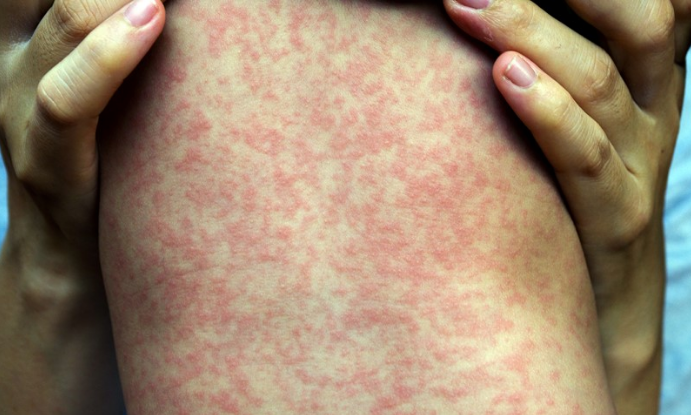
If you suspect your child has measles, either because of an exposure or because they have a fever AND a flat pink/red rash (at the same time), please call our office first and do NOT enter any healthcare facility (including our building) without first notifying our staff members.
The Blue Ridge Health District reporting number for known exposures in undervaccinated individuals is: 434-972-6248.
(Updated 11/20/2026) -
The Virginia Department of Health is reporting a confirmed case of measles in a resident of the
Central Region. The patient is a preschool age child (zero to four years). To protect the patient’s privacy, VDH will not release additional information. Health officials are working to identify and notify people who may have been exposed.
Listed below are the dates, times, and locations of the potential exposure sites in Virginia:
- UVA Health University Medical Center, located at 1215 Lee St. in Charlottesville, between 2:45 p.m. to 5:15 p.m. Tuesday, November 17, specifically on:
- North Tower floors 3, 4, 5, 6, 7, and 8
- UVA Health University Medical Center, located at 1215 Lee St. in Charlottesville, between 5:15 a.m. to 10:15 a.m. Monday, November 16, specifically in:
- South Tower Lobby (including open area to second floor)
- Pediatric and Adult Emergency Departments
- Centra Southside Community Hospital Emergency Department
located at 800 Oak St. in Farmville
between 10 p.m. Sunday, November 15 through 12:15 a.m. Monday, November 16.
Any additional exposure sites identified in Virginia will be posted to the VDH Measles website. If you: live in BRHD, were at one of the listed exposure sites, and/or are unsure of your measles vaccination status, call us at 434-972-6248.
If you think you have been exposed to measles, please isolate at home (if you do not need urgent or emergent attention), complete this form, and the health department will reach out to you to minimize exposure to others.
Remember that measles is the most contagious virus that we know of and going to a healthcare facility without notifying anyone can put medically vulnerable (especially unvaccinated or immunocompromised people) at risk.
If you need medical attention, please notify your medical team that you may be contagious before going inside the building so that they can prepare and minimize your exposure to others.
The Virginia Department of Health is recommending that everyone in the state who have not already gotten 2 doses of MMR vaccine get immunized using an accelerated vaccination schedule (more below).
The accelerated MMR vaccine schedule is the best studied and safest way
to quickly protect young children from catching measles.
We recommend:
- 6-11 month olds get an extra, early MMR immunization
- 12 month olds get their routine MMR dose (typically at the 1 year well child visit)
- 13+ month olds get the typical 4-5 year MMR dose early, 28+ days after the 12 month dose
(they will NOT need an MMR immunization at the 4-5 year old well child visit)
Here is more information from the American Academy of Pediatrics Healthy Children parenting website
about
protecting your baby during a measles outbreak and
protecting your child during a measles outbreak.
How does someone know if they are protected against measles?
- If you have received two doses of a measles-containing vaccine (after 12 months of age), or were born before 1957, you are protected and do not need to take any action.
- If you have never received a measles containing vaccine (either the measles, mumps and rubella [MMR] vaccine or a measles-only vaccine which is available in other countries), you may be at risk of developing measles.
- Non-immune individuals may qualify for post-exposure treatments. People who might have been exposed and are not immune should contact their health care provider or local health department immediately to coordinate administration of post-exposure prophylaxis.
- Watch for symptoms for 21 days after the date of your potential exposure. If you notice symptoms of measles, immediately isolate yourself by staying home. Contact your healthcare provider right away. If you need to seek healthcare, call ahead before going to your healthcare provider’s office or the emergency room to notify them that you may have been exposed to measles and ask them to call the local health department. This call will help protect other patients and staff.
- Anyone with an immunocompromising condition should consult with their healthcare provider if they have questions or develop symptoms.
- If you have received only one dose of a measles-containing vaccine, you are very likely to be protected and your risk of being infected with measles from any of these exposures is very low. However, to achieve the highest level of protection, contact your healthcare provider about getting a second vaccine dose.
Measles is a highly contagious illness that can spread easily through the air when an infected person breathes, coughs, or sneezes. Measles symptoms usually appear in two stages. In the first stage, most people have a fever of greater than 101 degrees, runny nose, watery red eyes, and a cough. These symptoms usually start seven to fourteen days after being exposed. The second stage starts three to five days after symptoms start, when a rash begins to appear on the face and spreads to the rest of the body. People with measles are contagious from four days before the rash appears through four days after the rash appeared.
Measles is preventable through a safe and effective MMR vaccine. Two doses of the vaccine are given to provide lifetime protection. Virginia has high measles vaccination rates, with approximately 95% of kindergarteners fully vaccinated against measles. However, infants who are too young to be vaccinated, and others who are not vaccinated, are very susceptible to infection if they are exposed to measles. Infants six months through 11 months of age who will be traveling internationally, or to an outbreak setting, should receive one dose of MMR vaccine prior to travel. Talk to your healthcare provider if you have questions about the MMR vaccine.
To check your immunization status, call your healthcare provider or request your vaccination records using the VDH Immunization Record Request Form at vdh.virginia.gov/immunization/viis/ . Virginia residents with additional questions about their potential exposure can email epi_response@vdh.virginia.gov or contact your local health department.
The Centers for Disease Control (CDC) website is no longer being updated regularly at this point, so
please check the Virginia Department of Health (VDH)
for the most up-to-date information in our area
, as well as national news or local health department websites for the latest information on case numbers for each state.
The Healthy Children website has a
comprehensive description of measles and the vaccine schedule for children here.
Remember that the measles vaccine is extremely safe and protective. However, it is a live attenuated vaccine and so some who are immunocompromised or pregnant cannot get the shot (if they were not immunized previously). Also, the first dose is typically administered at 12 months of age, so most infants are at high risk for getting infected. Infants, other unvaccinated, and immunocompromised individuals all rely on herd immunity to keep them safe, so it is important to keep communities protected against measles to protect everyone.
When herd immunity drops below 95%, outbreaks are likely to happen once someone with measles enters the community (often from international travel).
Some measles facts:
- Measles is considered one of the most infectious diseases (airborne) on earth. If 10 unvaccinated people are exposed to someone with measles, 9 will get infected. The virus can remain infectious in the air for up to 2 hours after an infected person leaves an area.
- People with measles are contagious from 4 days before the rash appears until 4 days after it erupts (though immunocompromised individuals can be contagious for the duration of the illness.)
- The incubation period ranges from 7 to 21 days.
- It can also make children very sick - for people without immunity, 1 in 5 will be hospitalized, 1 in 20 will develop pneumonia (the most common way measles kills young children), 1 in 1000 will develop encephalitis (infection of the brain, sometimes causing permanent brain damage), and 1-3 in 1000 will die.
- It can cause “immune amnesia,” where the immune system loses its ability to fight other viruses that people were previously immune to.
- It can cause subacute sclerosing panencephalitis (SSPE), which shows up 7-10 years after measles infection (even mild infections) and is 100% fatal. Children who are under 2 years of age when they catch the measles are at the highest risk for SSPE (1 in 600 who catch measles in infancy, 1 in 1,400 who catch measles before age 5, 1 in 10,000 for older children)
- Children are normally vaccinated against measles with the Measles, Mumps, Rubella (MMR) vaccine at 12 months and again at 4-5 years of age, but can get an accelerated schedule in case of outbreaks.
- Accelerated schedule in case of community outbreaks:
- Extra dose for 6-11 month old infants ("dose zero"), separated by 28+ days from the "first dose" at 12+ months of age.
- Children who have only had the 12 month dose can get their second dose of vaccine 28+ days after the first dose.
- The vaccine is fully protective approximately 10-14 days after administration (93-95% protection after 1 dose, 97-99% protection after the second dose.)
- People born before 1957 might not require vaccination because measles was so widespread in the mid-1950s and earlier, it is assumed that everyone already had the disease and has natural immunity. However, during an outbreak it might be worth checking immunity (IgG to measles) or getting an MMR booster, particularly if you are a healthcare worker.
- People born between 1957 and 1968 may have gotten only 1 dose of killed measles vaccine (less effective than the current vaccine) and should check immunity (IgG to measles) or get an MMR booster if they have not previously gotten a second shot.
- Because MMR is a live attenuated virus vaccine, those who are pregnant or significantly immunocompromised cannot get the vaccine.
Find more measles information at HealthyChildren.org .
More links:
~
10 FAQs on MMR and Measles Protection, from Your Local Epidemiologist
~ Should your baby get an early MMR dose, from Unbiased Science
~ What to Know During a Measles Outbreak: FAQ, from UVA Health
~ Vitamin A Can't Prevent the Measles, from UVA Health
~ Measles: Separating fact from fiction, from Sentara Hospital
Also please review this
PDF
from The Unbiased Science Podcast for more detailed information about measles immunity (a special thank you to @unbiasedscipod for their generous share of their slides).
We will continue to update this site.